
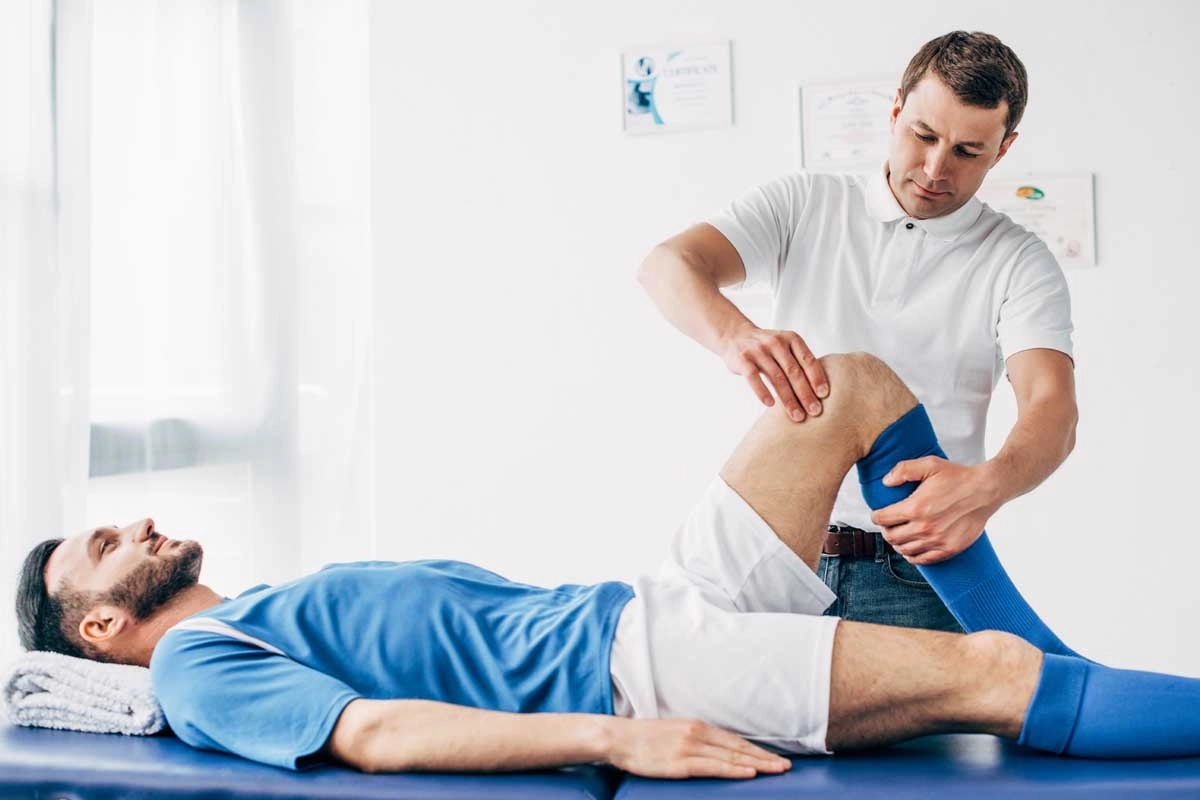
Watching from the sidelines while everyone else plays? That’s frustrating!
And the longer you’re out, the more questions start piling up. When will you play again? Will your injury fully heal? And what if you get hurt again?
That’s where sports injury recovery therapy comes in. But if you’ve never tried it before, you might wonder what actually happens during those sessions and how they help you get back on your feet.
That begins with a proper assessment of your injury. With professional sports injury treatment in Brampton, those findings will go a long way towards helping you determine the best way forward.
So what does that journey look like? Let’s go through your first session, the treatments you might receive, and how long your recovery might take.
What Is Sports Injury Recovery Therapy?
Sports injury recovery therapy (also known as sports injury rehabilitation or sports rehab) is a structured programme to help an injured muscle, joint, tendon or ligament heal and get back to working normally. It’s a combination of hands on care and guided exercise.
That blend of hands on care and exercise takes you from early injury rehab through to a full return to sport. You can start gentle rehab whilst the pain and swelling are still resolving, with your clinician dictating what’s appropriate at each stage.
Young athletes need that guidance as well. A 2023 Public Health Agency of Canada study found that play, sport and physical activity were the most common activities behind the injuries it looked at in Canadian children and youth.
Whatever your age, the therapy will help you work towards full activity via four interrelated goals.
Mobility work helps you regain the joint’s range of movement, and flexibility work helps tight muscles lengthen again.
Strength training then rebuilds the muscles that protect the injured area. Finally, a gradual return plan gets you back to running, jumping or contact in small steps (no-one goes straight from the couch to a full scrimmage) so your body has a chance to adapt to each new demand before you add the next one.
At Dr Sandhar Wellness Dr Luvraj Sandhar takes the same approach, combining manual therapy with movement based therapy. The manual therapy works to relieve the pain and stiffness first, which in turn makes the exercises much easier to do. Over time, the exercises rebuild the muscles so you can get back to your sport.
Her (Dr. Luvraj Sandhar) sports injury program serves everyone from casual weekend players to competitive athletes. It’s for people coming out of surgery as well as those with critical injuries (tendinitis, shin splints, stress fractures etc).
That focus on athletes comes from real experience with a sports team.
Where Can You Receive Sports Injury Recovery Therapy?
Dr Sandhar Wellness is one of the options for sports injury recovery therapy. You’ll find this type of care at physiotherapy clinics, other chiropractic and wellness clinics, sports rehab centers, and in hospital outpatient programs. In all cases, it’s a qualified health professional who will assess your injury and then manage your recovery.
Each setting has a different focus, so here’s what the four options above offer.
- Physiotherapy clinics (that’s the Canadian term for physical therapy clinics) are staffed by registered physiotherapists who treat the majority of muscle, joint and ligament injuries with exercise and manual therapy.
- Chiropractic and wellness clinics (e.g. Dr Sandhar Wellness) offer chiropractic care, physiotherapy, massage therapy and rehab all in one place. Their licensed chiropractors are on the College of Chiropractors of Ontario public register so it’s easy to verify their credentials.
- Sports rehabilitation centers add gym space and sport-specific drills, which helps competitive athletes during the final stage before full training.
- Hospitals and sports medicine have doctors who deal with fractures, complete tears and any injury that requires imaging or surgery. They then refer the patient on to a clinic for rehab.
The appropriate setting will depend on the type of injury, how severe it is and your individual recovery requirements (i.e. your sport, your schedule, a recent surgery). That’s why (people suffering from) mild ankle sprain is perfectly suited to an outpatient clinic whereas Dr Sandhar Wellness would recommend that anyone with a post-op or more serious injury should see a doctor first.
Why Is Sports Injury Recovery Therapy Important?
Sports injury recovery therapy is important because feeling better is not the same as being ready to go back and play. A period of rest may well settle the pain but it may not necessarily restore all the strength, movement and control that you’ve lost as a result of the injury. That’s what rehab is for. It’s about addressing the problems so that when you do go back to your sport you’re much less likely to have another injury.
Here are six ways it can help, along with what Dr Sandhar Wellness does in each case.
| Benefit | Why it matters | How Dr Sandhar Wellness helps |
| Restores function | Feeling comfortable at home is one thing. Cutting, throwing, or lifting during sport places much greater demands on an injured knee or shoulder. | Dr. Sandhar uses exercises based on the movements you need for your sport. |
| Rebuilds strength | Muscles can lose strength when you stop using them as much after an injury. The joint then has less support. | Your exercises focus on rebuilding the muscles that support the injured joint. |
| Improves mobility | A stiff joint or tight muscle can make another part of your body do more work. Over time, that can add strain elsewhere. | Manual therapy, soft tissue therapy, and mobility exercises help the injured area move more freely. |
| Addresses movement problems | A study cited in a 2021 clinical guideline found chronic ankle instability in 40% of patients one year after their first lateral ankle sprain. For these patients, the ankle could still feel as though it might give way. | Dr. Sandhar checks your movement, posture, and balance to see what may still be affecting the injured area. |
| Reduces reinjury risk | A 2023 study of 422 elite teenage athletes found that those with a past injury had nearly four times the odds of being in the high-injury group rather than the injury-free group. | Prevention exercises and a home routine help you maintain the strength and control gained during treatment. |
| Supports a safe return | Pain may disappear before your full strength and control return. Going back at this point can put you at risk of another injury. | Dr. Sandhar brings training back step by step, rather than sending you straight from rehab into full competition. |
This is why Dr Sandhar looks beyond the sore spot and looks at what may have caused the injury. Pain tends to go away before weakness or stiffness does. If you just leave those problems alone, the same area is going to be more susceptible to re-injury.
How Does Sports Injury Recovery Therapy Work?
Sports injury recovery happens one step at a time. At Dr Sandhar Wellness it’s a 5 stage process: initial assessment, individual treatment plan, guided exercises, progress checks and then assistance in getting back to your normal activities. What she sees and what you tell her at each appointment will determine whether she continues with the current plan, slows things down or alters the plan.
1. Initial assessment
Firstly, Dr Sandhar needs to get a proper understanding of the injury. She looks at the painful area, looks at how well it moves and she assesses the severity of the problem.
She doesn’t just look at the area that’s injured. The adjacent joints and muscles are equally important as weakness or stiffness in one area can place extra strain on another. Depending on the injury, she may also check your posture, balance, and movement patterns.
2. Personalized treatment plan
Dr Sandhar then uses what she has found to put together a treatment plan for you. The plan will tell you what will happen at each of your visits, what exercises you will be doing at home and what she will be checking as you go through your recovery.
Your sport will also have an effect on the plan. A sprinter with a hamstring strain is going to be looking at very different exercises and recovery requirements to a goalkeeper with a sore shoulder.
3. Guided exercises
Guided exercise is a key component of the plan. It’s all about getting you back to the level of movement, strength and control you need for your sport.
You can begin with some simple range of motion exercises. As you progress, Dr. Sandhar then introduces strength work, balance exercises and sport-specific drills, though the progression will be gradual.
You may well get a dull muscle ache, something akin to the ache you get after a hard workout. Sharp pain or pain that is increasing is a different matter. Let Dr. Sandhar know what you’re feeling during the session and what the area feels like the following day, as this will help her to assess whether the exercise was too much.
4. Progress monitoring
That feedback is important. At every visit, Dr. Sandhar asks you how you’ve felt with the exercises and checks your pain, your range of motion and your strength.
If it leaves you with more pain the next day, she’ll either reduce the load or change the movement. If you can do it and still not feel any worse, the next day she may go on to add more repetitions, increase the resistance or give you a more difficult version. The aim is simply to keep you progressing without going too far.
5. Return-to-activity planning
When your strength and movement start to return, Dr Sandhar will help you get back into your sport. You don’t just go from rehab to full on competition. Instead, you may start with modified practice, progress to full training, and then finally get back to a game or competition.
Time on its own doesn’t tell you when you’re ready. Dr. Sandhar will also look at your strength, your movement, your confidence, and how the injured tissues have healed. Once you’re back, she may well recommend a very short home program to help you maintain the strength you’ve worked so hard to build.
What Happens During Your First Sports Injury Recovery Therapy Session?
During your first session Dr Sandhar will assess the injury and start to put your recovery plan together. She’ll ask you how the injury occurred, look at your symptoms and movement and then talk to you about what you’d like to do again.
Most first sessions follow this order:
- Talk about the injury: You discuss how the injury happened, when the pain began, and any past injuries or surgeries in the same area.
- Discuss your symptoms: Dr. Sandhar asks where it hurts, what makes it worse, and how it affects your sleep, work, training, or daily routine.
- Check your movement: She looks at how the injured area moves, bears weight, and stays stable. She may also check your posture and muscle activation.
- Set your goals: You talk about what you want to work toward, such as running without pain or finishing a full game.
- Choose your treatment: Using what she has learned, Dr. Sandhar chooses care that suits your injury, your stage of recovery, and your goals.
- Make a home plan: Before you leave, she may give you simple exercises or other steps to follow at home. These help you continue your recovery between visits.
For the movement checks, wear comfortable clothes that allow you to move freely (shorts can be very useful if you’ve got a leg injury). If you have any imaging reports or your surgeon’s notes, please bring them so Dr Sandhar can review them.
You can book without seeing your doctor first. The Ontario Chiropractic Association states that you do not need a doctor’s referral to see a chiropractor in Ontario.
What Treatment Methods Are Used During Sports Injury Recovery Therapy?
| Method | What it involves | When it may be used |
| Therapeutic exercises | Exercises that help the injured area move well again and change movement habits that may be adding strain. | Throughout recovery, with easier exercises at first. |
| Mobility training | Range-of-motion exercises and stretches that help a stiff joint move more freely. | During the early and middle stages, once sharp pain has eased. |
| Strengthening exercises | Exercises using your body weight, resistance bands, or weights to rebuild the muscles around a joint. | Once the injury can handle more resistance. The difficulty increases bit by bit. |
| Balance and coordination drills | Single-leg work and other controlled movements that improve balance and stability. | During the middle and later stages, especially after a knee or ankle injury. |
| Manual therapy | Hands-on methods such as myofascial release, which uses gentle, steady pressure on tight tissue. | Early in recovery or whenever stiffness makes exercise difficult. |
| Soft tissue therapy | Hands-on work for tight muscles, tender areas, and irritated soft tissue. | During the early and middle stages or when repeated movements have caused tightness. |
| Massage therapy | Muscle work that loosens tight areas and helps you relax between training days. | When it suits the injury. Massage over a fresh sprain or strain is usually avoided during the first two days. |
| Chiropractic adjustments | Controlled adjustments to the neck or lower back that help stiff spinal joints move more freely. | When stiffness in the spine or posture is affecting your movement. |
| Medical acupuncture | Fine, sterile needles placed at specific points to help ease pain and muscle tension. | Alongside exercise when pain is making movement difficult. |
| Shockwave therapy | A device sends sound waves into the injured tissue to encourage blood flow and repair. | For long-term tendon pain, plantar fasciitis, and muscle injuries that are slow to heal. |
You may only require a few of these treatments. Dr Sandhar will decide what is appropriate for your injury and the treatment she uses can change as your pain settles and your movement improves.
How Long Does Sports Injury Recovery Therapy Take?
Sports injury recovery therapy has no set timeline. A mild strain and a severe ligament tear are very different injuries, and even two people with the same injury may not heal at the same pace.
This is why your recovery time depends on 7 things:
- How serious the injury is: Clinicians grade sprains and strains from 1 to 3. Grade 1 is mild, while Grade 3 is a complete tear and usually takes much longer to heal.
- What you have injured: Muscles often heal faster because they have a better blood supply. Tendons and ligaments may need more time.
- Your general health: Your age, sleep, diet, whether you smoke, and conditions such as diabetes can all affect healing.
- How regularly you do your rehab: Home exercises help you build on the work done during your visits. Long gaps can slow your progress.
- How your body responds: People heal at different rates. Two people can follow the same plan and still recover at different times.
- What your sport asks of your body: Jumping, quick turns, and physical contact require more strength and control than steady activities such as cycling. Returning to these sports may take longer.
- Whether you need surgery: Surgery usually means a longer recovery. Dr. Sandhar plans your therapy around the instructions given by your surgeon.
Rather than giving you a fixed end date, Dr. Sandhar checks your pain, movement, and strength at each visit. She then changes the plan when needed.
Book Your Sports Injury Recovery Consultation
Getting back safely takes more than waiting for the pain to disappear. A proper assessment shows what has been injured, while guided exercises help you rebuild the movement, strength, and control you need for your sport.
Whether you rolled an ankle during weekend soccer or developed a sore shoulder after a heavy bench session, Dr. Sandhar shapes your plan around your injury and what you want to get back to. Return stronger, not sooner. Book your free consultation today!
Frequently Asked Questions (FAQs)
Q1. What Is the Hardest Sports Injury to Recover From?
There is no single hardest sports injury, but an ACL tear can be one of the most difficult. If reconstruction is needed, rehabilitation often lasts for months, and returning to sport takes more than waiting for the knee to heal. You also need to rebuild strength, balance, and control.
Q2. How long does physical therapy recovery usually take?
Physical therapy does not follow one fixed recovery timeline. How long it takes depends on the injury, its severity, whether surgery was involved, and what your sport requires. Dr Sandhar Wellness reports that most clients see visible results within 4 to 8 sessions. That early progress does not necessarily mean rehabilitation is finished. A severe tear or surgery can extend the process beyond those first sessions, especially when the goal is a safe return to sport.
Q3. What’s the worst muscle to tear?
There is no single worst muscle to tear, but hamstring tears can be especially troublesome because hamstring injuries can recur. A 2023 UEFA study found that about 18% of the hamstring injuries recorded across the study were recurrences. The same study found that hamstring injuries accounted for 24% of all injuries in men’s professional soccer during the 2021/22 season, showing how common the problem had become. With that recurrence risk in mind, Dr Sandhar Wellness focuses on rebuilding hamstring strength before you return to sprinting or other demanding movements.
Q4. What are the most difficult sports injuries to recover from?
Besides ACL and hamstring tears, Achilles tendon ruptures, rotator cuff tears, meniscus tears, and stress fractures can also require lengthy rehabilitation, depending on their severity. The recovery period after Achilles surgery shows how demanding that process can be: a 2025 review found that although 77% of patients returned to sport, the average return took 8.1 months. If you’re recovering from a rotator cuff or meniscus tear, Dr Sandhar Wellness also offers Rotator Cuff Injury Therapy and Meniscal Tear Rehabilitation.