
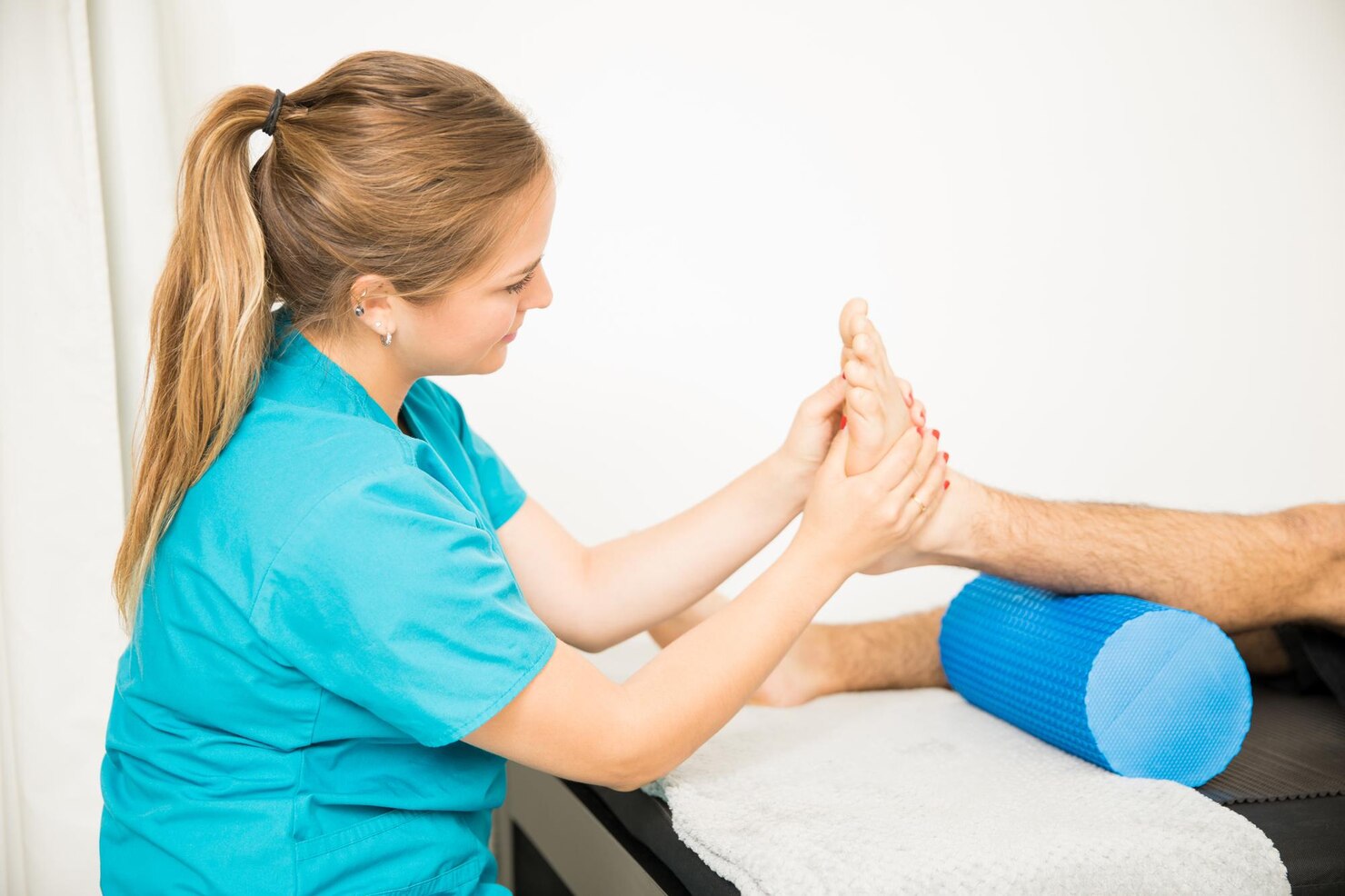
Foot pain can be easy to brush aside when it starts as something small, a sore heel after a long day, a tight arch when you get out of bed, or a toe that hurts in certain shoes. You keep going because you still can, telling yourself, “It’ll probably settle down.” But what happens when it doesn’t?
As foot discomfort keeps showing up, the way you move can start changing. You may walk more carefully, avoid activities you enjoy, shift weight onto the other foot, or spend less time moving. What starts as a foot problem can slowly start affecting how your whole body moves.
That is why foot mobility matters more than getting rid of an ache. Your feet are part of the system that helps you balance, absorb force and move with each step. When one part is not working well, other areas may have to adapt too, sometimes showing discomfort in the knees, hips, or back. This blog explores why that connection matters and what restoring foot mobility can involve.
How Foot Pain Can Change the Way You Walk
Walking usually feels like something you never have to think about, until your foot starts hurting. Then you may step around the sore spot differently, or put more weight on the other side. Soon these little changes can become part of your normal way of walking. Those changes might look like:
- Altering your gait to prevent pressure on the painful area of the foot.
- Trying to lean on the other foot more because it is more comfortable.
- Taking smaller steps or changing your normal walking style.
- Pushing off less through the painful foot when taking the next step.
- Avoiding stairs, uneven paths, or certain movements because you know they will hurt.
7 Common Types of Foot Pain That May Affect Mobility
Foot pain can show up in different places and where it starts often gives you a clue about what part of walking may feel difficult. From the heel to the toes, each type can affect movement differently, so let’s look at the common forms and what they may mean for your mobility:
- Heel Pain: Pain is felt under or around the heel and may be strongest during your first few steps after getting out of bed or standing up after rest.
- Arch Pain: Soreness through the middle of the foot can make it uncomfortable to place and carry your normal body weight while standing or walking.
- Plantar Fascia-Related Pain: This is pain of the tissue from your heel to your toes that is worse when you first get up and start to walk after sitting or resting.
- Toe Pain: Painful toes can affect the push-off when walking, affecting balance and changing the way a person moves from one step to the next.
- Forefoot Pain: A ball of the foot may cause pain when walking or standing, particularly in tight or poorly fitting shoes.
- Foot and Ankle Stiffness: If you don’t have full range of motion in your foot or ankle, the normal gait may feel less fluid, especially as you move your weight from your heel to your toes.
- Overuse-Related Foot Pain: This is often an insidious type of pain that occurs after repeated activity, like walking, running or exercise, particularly if the foot is not given adequate rest time between bouts.
How Foot Pain Treatment Helps Restore Mobility
If you want to get rid of foot pain, you have to think beyond the pain itself, think beyond the problem. Just lying still until the pain subsides can be helpful, however, it may be failing to treat the movement or mechanical forces contributing to the pain. That is where treating the contributing factors becomes important.
Your foot works as part of a larger movement system, helping manage force each time you take a step. When its mechanics are affected, your gait can change too, so treatment may look at how the foot functions during everyday movement. From there, the focus can include;
- Easier movement through the ankle, arch and toes.
- More flexibility in tight or restricted tissues.
- Greater ease of movement in daily activities.
- A more comfortable walk.
How Foot Pain Treatment Can Support an Active Lifestyle
It may seem like a gradual process to get back into activities after foot pain begins to interfere with your routine. Once you have solved the cause, you can walk more comfortably and confidently, and slowly bring the activities you enjoy, including:
- Longer and more comfortable walks.
- Getting back into exercise and sport confidently.
- Feeling more comfortable during everyday movement.
- Getting back to hiking, dancing and recreational activities.
- Feeling less need to avoid certain activities.
- Establishing the habit of building movement that can be sustained long-term.
In 2022, 16.7% of Canadians aged 15 and older had a pain-related disability, affecting about 4.9 million people. Statistics Canada also found that restricted mobility was one of the main reasons people with pain-related disabilities considered themselves housebound.
When Should You Seek Professional Help for Foot Pain?
Not every sore foot needs a professional assessment, especially if it settles after rest. But when pain keeps returning or starts changing how you walk, work, or exercise, it is worth finding out what is causing it instead of continuing to work around the discomfort. Consider getting assessed if you notice:
- Pain keeps returning: The pain comes back after rest, ice, or other simple care, even when it seems to improve for a while.
- Pain interferes with walking: Walking normally becomes difficult, or even short distances leave you changing your pace because of discomfort.
- Symptoms affect work or exercise: You start missing workouts, avoiding sports, or finding it harder to stay on your feet during work.
- Pain persists despite self-care: Rest, stretching, supportive shoes, or other basic measures have not improved the problem as expected.
- Mobility is becoming limited: Your foot or ankle feels stiffer than usual, or once easy movements have become harder.
- You change how you walk to avoid pain: You start altering your stride, putting more weight on another foot, or changing your posture just to avoid discomfort.
Get Professional Foot Pain Treatment from Dr Sandhar Wellness Today!
Living with foot pain can slowly change more than the way you walk, it can affect your workouts, weekend plans, workday and willingness to stay active. Understanding what is causing the discomfort is the first step toward getting back to movement without constantly thinking about your feet.
At Dr. Sandhar Wellness, foot pain treatment looks at how your feet work with the rest of your body. The team considers factors such as foot mechanics, gait, posture and footwear before creating an approach based on what may be contributing to your discomfort.
You shouldn’t have to keep saying “maybe next time” to the walks, workouts, hikes, or plans you genuinely want to enjoy. When foot pain keeps deciding where you can go and what you can do, it can slowly take away more than comfort, it can take away freedom. So, book your foot pain assessment with Dr. Sandhar Wellness today and start taking that freedom back.
Frequently Asked Questions (FAQs)
Q1. How long does it take to recover from foot pain with proper treatment?
Recovery time varies greatly depending on the cause and how long symptoms have been present, anywhere from a few weeks to a few months. Consistent, focused treatment usually produces faster and more lasting improvement than rest alone.
Q2. Can foot pain actually affect your knees, hips, or back?
Yes, changes in your gait from foot pain can shift the distribution of weight through the body and often result in new strains in the knees, hips or lower back. This chain reaction is why early treatment counts.
Q3. What is the difference between heel pain and plantar fasciitis?
Heel pain is a general symptom, and plantar fasciitis is one common cause of heel pain – inflammation of the tissue that joins the heel to the toes. Plantar fasciitis is not the cause of all heel pain.
Q4. Is it normal for foot pain to come and go?
Intermittent foot pain is often a sign of an underlying mechanical problem that is aggravated by certain activities or shoes. Even mild pain that persists is typically worth looking into, rather than ignoring.