Most athletes stop treatment the moment pain fades, and that choice usually leads them into a second injury. While the pain may fade quickly, the damage beneath it can last much longer.
That lasting damage is part of what makes a sports injury more than temporary pain. According to NIAMS, a sports injury is damage that most often occurs during sports or exercise, though these injuries can also affect people who never compete. That means both professional and recreational athletes can struggle with stiffness, reduced strength, and fear of reinjury. Over time, these problems can make it harder to return to your previous performance level.
Rest alone will not be enough because it can reduce pain without rebuilding strength or restoring normal movement. For this reason, effective sports injury treatment focuses on rehabilitation rather than quick relief.
What Is Sports Injury Rehabilitation?
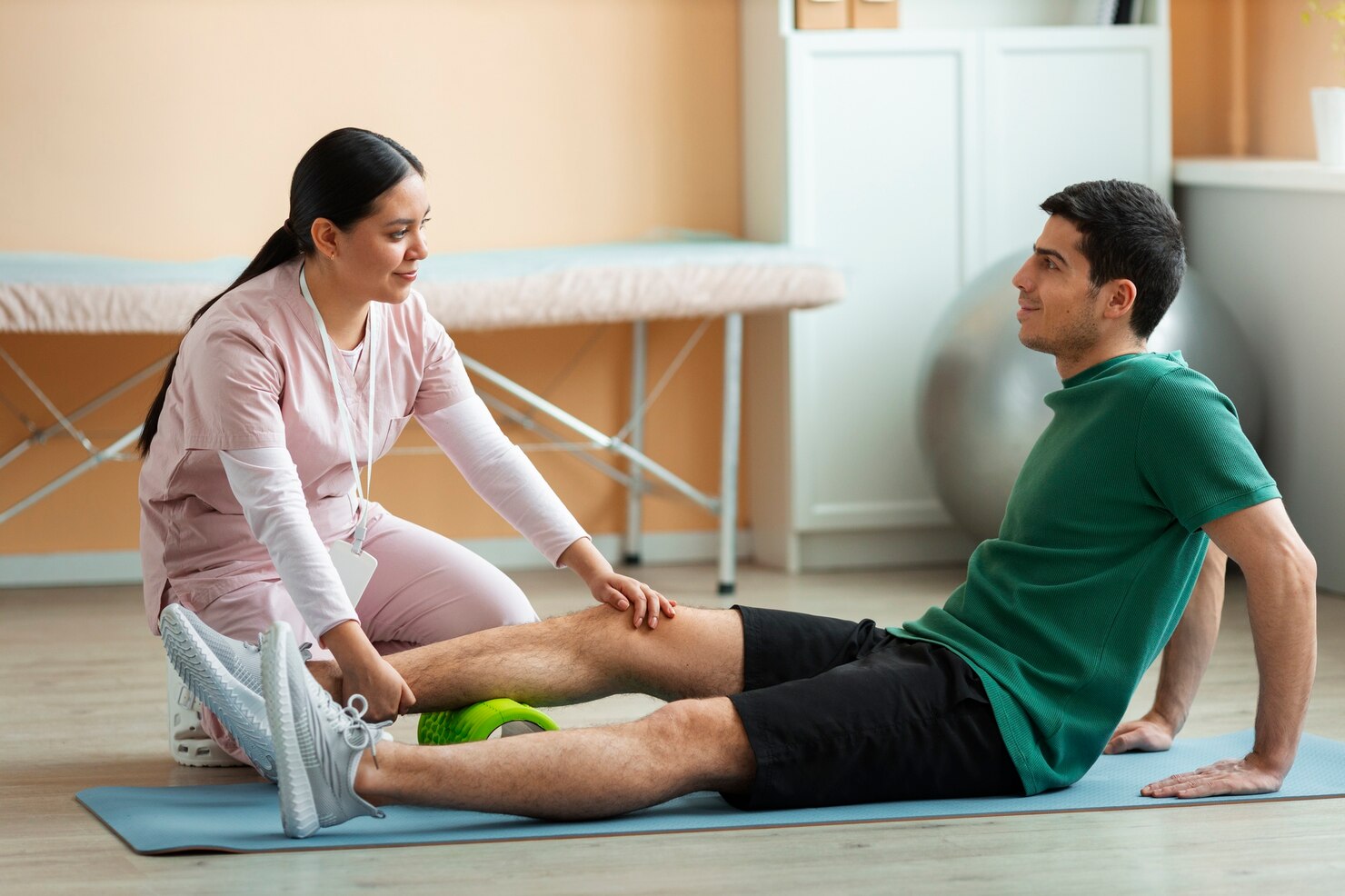
Sports injury rehabilitation is a guided recovery plan that restores mobility, rebuilds strength and stability, and prepares your body to return to sports and exercise. Resting only calms pain whereas rehabilitation helps restore the movement and strength lost through injury.
Without gradual movement and loading, your joints can tighten and your muscles can weaken during recovery. Rehabilitation avoids these problems by gradually increasing activity in the injured area first restoring movement and control and then building strength.
Why Proper Rehabilitation Matters After a Sports Injury
Proper rehabilitation matters because it restores the strength and movement control your injury took away, helping reduce the risk of reinjury. Here are the 5 reasons why rehabilitation matters:
- Restoring normal movement in the injured joint
- Rebuilding strength in muscles weakened by the injury
- Improving joint stability without placing unnecessary strain on it
- Correcting the movement habits you built during recovery
- Lowering your risk of reinjury
What Role Can Chiropractic Care Play in Sports Injury Rehabilitation?
Chiropractic care can support sports injury rehabilitation by examining joint function, posture, and the physical factors that contribute to recurring pain. In practice, Dr Sandhar focuses on 5 areas:
- Assessing how your musculoskeletal system (joints and muscles) function
- Addressing joints that move poorly
- Supporting better movement during recovery
- Evaluating your posture and biomechanics (how you move)
- Managing musculoskeletal factors that contribute to pain
What Role Does Physical Therapy Play in Sports Injury Recovery?
Physical therapy plays an active role because guided exercise helps restore the strength, balance, and control your sport requires. In practice, that work involves 5 stages:
- Restoring mobility as swelling improves
- Building strength through progressive loading
- Improving balance and coordination
- Practicing movements needed for daily activity and sport
- Adding sport-specific rehabilitation before competition
Chiropractic Care vs Physical Therapy for Sports Injuries
Chiropractic care and physical therapy differ in their methods but both can support recovery from injury. One uses hands-on care to address joint function while the other builds strength through exercise. Here is how they compare:
| Factor | Chiropractic care | Physical therapy |
| Main focus | Joint function | Strength and endurance |
| Method | Hands-on therapy | Guided exercise |
| Session style | Practitioner-led | Athlete-led |
| Pain approach | Mechanical sources | Graded loading |
| Strength work | Limited | Central |
| Home plan | Mobility advice | Structured exercises |
| Best timing | Early stages | Middle and late stages |
Which Sports Injuries May Require Rehabilitation?
Rehabilitation is especially useful for sports injuries that leave lasting weakness, limited range of motion, or pain during movement (including pain that shows up hours after training). Among these, 8 common injuries benefit from sports injury rehabilitation:
- Muscle strains from sudden force or overstretching
- Ligament sprains affecting the ankle and knee
- Knee injuries that make bending difficult when the joint bears weight
- Meniscal injuries that catch or lock the joint
- Shoulder injuries that restrict overhead reach
- Rotator cuff injuries that make lifting and throwing difficult
- Overuse injuries such as tendinitis and shin splints
- Back injuries that limit twisting and lifting
How Rehabilitation Can Support a Safe Return to Sports
Rehabilitation supports a safe return to sports by gradually increasing what your body can handle so you can adapt to each level of activity before moving to the next. Even so, returning too early is a common reason athletes suffer reinjury, because pain can fade long before the injured tissue has fully recovered. That’s why 5 factors help determine your readiness:
- Gradually rebuilding your physical capacity
- Restoring confidence in how you move
- Improving strength and joint stability
- Testing sport-related (functional) movements while fatigued
- Handling increased activity without worsening symptoms
Once you meet those 5 criteria, a typical return-to-sport progression moves through 6 steps:
- Symptom management
- Mobility restoration
- Strength development
- Functional movement training
- Sport-specific training
- Gradual return to full activity
Contact Dr Sandhar Wellness for Sports Injury Rehabilitation Today!
Recovery works best when mobility, strength, and stability are rebuilt in stages rather than all at once. That is why Dr Sandhar Wellness builds every plan around your sport, your injury, and the goal that matters most to you: competing again with confidence.
Every session combines hands-on manual therapy with guided exercises – and you leave our clinic with a home program to continue your recovery rather than relying on temporary relief. Beyond short-term pain relief, structured sports injury treatment helps you protect the progress you have built through training.
Book your free consultation and get back to your sport training sooner!
Frequently Asked Questions (FAQs)
Q1. What are the 5 stages of rehabilitation in sport?
The 5 stages cover pain and swelling control, mobility restoration, strength rebuilding, functional movement, and sport-specific training. Each stage builds on the one before it so skipping ahead can cost you recovery time.
Q2. What is the hardest sports injury to recover from?
Anterior cruciate ligament (ACL) tears are among the hardest sports injuries to recover from because they may require surgery, months of strength training, and a gradual return to sport. Achilles tendon ruptures are also difficult to recover from because the Achilles tendon takes a lot of force with every step.
Q3. What is the slowest injury to heal?
Cartilage injuries often take the longest to heal because cartilage has a limited blood supply – and does not repair itself easily. Ligament and tendon injuries can take longer to heal than muscle injuries because they have less blood flow.
Q4. How do I know if my muscle tissues are damaged?
Pain during one specific movement, swelling, bruising, and a clear drop in strength all point toward damaged muscle tissue. A proper assessment confirms the severity so book an evaluation before training through it.