
We’ve all done the morning hobble…
You step down from your bed in the morning, freeze for a second, and hobble around until your feet slowly “warm up.” That very first step out of bed can tell you everything about how your day is going to go. A lot of people just grit their teeth and move on with their day. As it’s easy to write it off as just getting older or working too hard on your feet. But the data shows this isn’t just everyday tiredness…plantar fasciitis peaks right in our 40s, 50s, and 60s, and women end up dealing with it nearly two and a half times as often as men.
Trying to cure that kind of stubborn ache by only massaging your heel is a losing battle. Your feet carry the burden of your whole daily routine plus those flimsy shoes offer zero support. Even applying ointment on the spot that throbs misses the point. In contrast, taking a holistic route means figuring out why your body is dumping all that stress into one vulnerable spot in the first place. Once you see how all those hidden mechanics connect under the surface, making the right changes becomes a whole lot easier and your mornings become a lot less painful.
So, to get back to walking, running, and living without constantly calculating your next step, you have to look at the subtle chain reaction happening across your entire body and that’s exactly what we will be covering in this article.
What Can Cause Foot and Heel Pain?
It’s easy to blame bad luck when your heels start hurting, but chronic foot pain is almost always the result of cumulative daily stress. When your tissues are pushed beyond their limit, small mechanical issues start compounding very quickly.
In fact, overuse from standing, walking, or sudden spikes in exercise drives up to 15% of all foot related doctor visits. When you look closely at what’s actually happening under the surface during those long days on your feet, a few major culprits tend to stand out:
- Too much time on your feet without enough recovery
- Poor footwears with little support change how weight lands on your foot
- Irritated or tear of the band of tissue under your foot
- Joint inflammation and swelling around the ankle or toes
- Tightness around calves and arches
- Foot mechanics changes where the stress lands
How Can Foot Mechanics Affect Pain During Walking and Daily Activities?
Understanding the above physical triggers leads directly to a bigger question, why does the pain stick around even after you sit down or put your feet up? It usually comes down to how your body adapts when something feels off. Your feet aren’t just flat platforms…they’re shock absorbers designed to bend, flex, and roll smoothly with every step.
When one joint in your foot or ankle gets stiff, your body instinctively finds a workaround so you can keep moving. You probably don’t even notice you’re doing it, but these tiny subconscious shifts force your body to overcompensate. Here is how those hidden mechanics mess with your daily comfort:
- Unconscious Gait Changes: The moment an ankle or toe loses mobility, your body tweaks your foot strike to guard it. That temporary fix might feel safer, but it continually slams impact into parts of your foot that aren’t prepared for it.
- Uneven Weight Distribution: Slouching, leaning to one side, or walking on stiff arches creates intense pressure spots. Instead of your whole foot sharing the load, your heel takes the full weight of every single step you take.
- Flawed Walking Habits: Subtle quirks in how you walk like dragging a heel or rolling over your outer arches, accumulate stress step after step until inflammation sets in.
- Loss of Natural Foot Mobility: Stiff foot and ankle joints strip away your body’s built-in shock absorption, forcing your heel bone to take direct, unbuffered impact from the ground.
- Exceeding Your Physical Threshold: Standing or walking far longer than your feet are currently trained to handle drains your muscle stamina, leaving your delicate joints and bands of tissue completely unprotected.
Why Does a Holistic Approach Look Beyond the Painful Area?
Here’s why real relief means looking way beyond the spot that hurts…
Have you ever slapped an ice pack on a throbbing heel and felt that pain came right back the next day? Well, you’ve experienced why spot-treating an injury rarely lasts. Your feet sit at the very bottom of a kinetic chain that connects your toes all the way up to your hips and spine. A stiff lower back or a tight hip flexor can subtly alter how your leg swings forward, quietly dumping extra impact into your heel with every single step.
The link between your feet and the rest of your body is well documented and data shows that adults dealing with chronic foot pain are significantly more likely to also suffer from joint and lower back pain. Muscle balances also play a massive role. When your calves are perpetually tight or your arch muscles are weak, neighboring joints have to step up and work overtime to keep you balanced. That constant overcompensation is usually where the actual inflammation starts.
And that’s why a holistic assessment looks at your entire posture, gait, and movement chain, because fixing the foot itself won’t stick if the rest of your body is still pulling it out of alignment.
5 Holistic Therapies That May Help Relieve Foot and Heel Discomfort
Figuring out which muscles or joints are causing the trouble makes fixing your foot pain a whole lot simpler. So, instead of just masking the pain for a couple of hours, a natural holistic treatment plan blends hands-on care with real, evidence-based therapies.
And yes, there’s heavy duty science behind this approach where a massive trial published in the Archives of Internal Medicine looked at nearly 18,000 people and proved that treatments like acupuncture offer genuine, lasting relief for chronic aches, way beyond just a placebo effect.
Rather than trying a one-size-fits-all fix, your personalized plan will usually blend a few of these based on what your feet are telling you:
- Soft Tissue Therapy: Deep hands-on work targeted on easing tight tension in muscles and fascia around the foot and calf.
- Medical Acupuncture: A quick technique to relax overactive muscles, trigger points and bring circulation to stubborn aches.
- Acoustic Shockwave Therapy: High-energy sound pulses that break down calcified tissue in the heel and trigger healing in stubborn cases of plantar fasciitis.
- Custom Foot-Strengthening Exercises: Practical exercises designed to rebuild your arch’s natural suspension system so your joints don’t take a pounding.
- Guided Mobility and Range-of-Motion: Easy joint stretches and exercises that restore natural flex to stiff ankles and midfoot joints, taking the strain off your stride.
How Can Soft Tissue Therapy Support Foot Mobility?
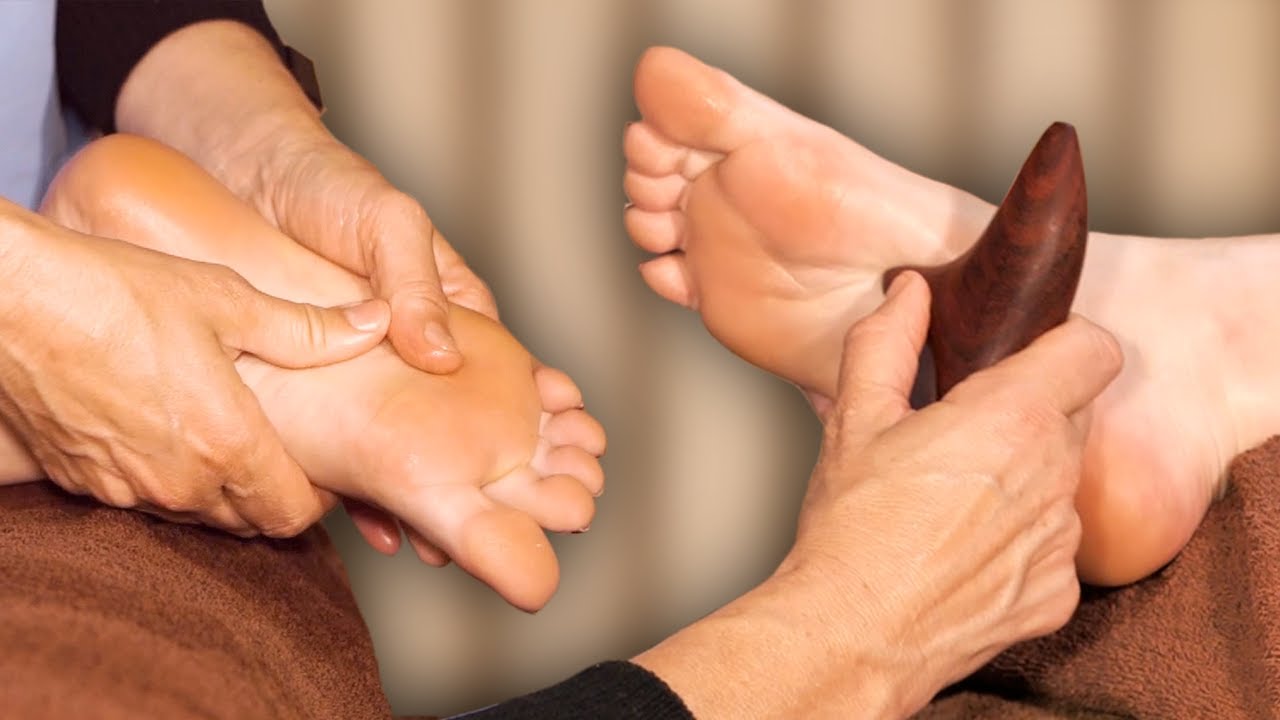
Soft tissue therapy goes straight after the tight muscles, stubborn knots, and restricted fascia that lock up your lower leg and foot. When the thick band of tissue under your foot or the calf muscles above it stay chronically tight, they yank on your heel bone and strip away your foot’s natural flexibility. Manual release work breaks down those restrictive adhesions, allowing the surrounding tissues to slide and glide past each other smoothly again.
Beyond immediate relief, research demonstrates measurable physical gains… Yes, clinical studies show that targeted soft tissue release on the calf and foot muscles improves ankle dorsiflexion, directly relieving the constant pull on the plantar fascia during daily walking.
Here is how that hands-on work actively restores your foot’s natural mobility:
- Releasing Deep Muscle Tension: Targeted pressure melts away stubborn tightness in your calves and arches, taking the continuous strain off your heel bone.
- Restoring Tissue Flexibility: Manual work stretches and softens rigid plantar fascia tissue so your foot can bend without pulling or tearing.
- Boosting Circulation: Kneading and releasing tight spots flushes fresh, oxygen-rich blood into irritated tissue to speed up natural repair.
- Unlocking Restricted Movement: Freeing up tight connective tissue lets your foot and ankle joints roll smoothly through a full, natural stride.
- Reducing Daily Tissue Fatigue: Clearing out built-up tension keeps your muscles relaxed between workouts, preventing small aches from turning into chronic flare-ups.
When Can Shockwave Therapy Be Considered for Heel Pain?
If you’ve spent months rolling your foot over a frozen water bottle, religiously stretching your calves every morning, and buying expensive insoles… only to still wince the second your heel hits the floor, it’s time to look at shockwave therapy.
Definitely, it isn’t usually the very first tool a therapist pulls out of the bag. As a matter of fact, it’s the heavy hitter you turn to when the basic, conservative fixes have hit a wall and your heel pain refuses to budge. When heel pain drags on for months, the damaged tissue under your foot essentially gives up on trying to repair itself. It gets stuck in a state of chronic, quiet irritation. That’s where acoustic shockwaves send targeted sound waves deep into the sole of your foot. It might sound a bit intense, but it basically acts as a loud wake-up call for your body. It restarts a fresh, healthy healing reaction in tissue that had completely stalled out.
And numbers back up why it’s such a go to for persistent cases, too. Clinical trials showed that shockwave therapy has a 50% to 65% success rate for people dealing with stubborn, long term plantar fasciitis,performing significantly better than placebo treatments.
When Should Persistent Foot or Heel Pain Be Professionally Assessed?
Look, not every minor ache or stiff ankle requires a run to the clinic. But when foot or heel pain becomes a constant background noise in your daily life, waiting for it to magically fix itself is usually “a plan not working.” If you’ve been dealing with a nagging ache for more than 2 or 3 weeks, noticing swelling that refuses to go down, or finding yourself cutting walks short just to stay comfortable, that’s your body giving you a clear signal to get professional help.
The biggest red flag isn’t always sharp pain…it’s actually how much you’re changing your routine to accommodate it. If you’re taking the elevator to avoid stairs, shifting your stride, or limping through your evening errands, those subtle compensations are already overloading your knees, hips, and back.
Getting an evaluation early keeps things simple. The longer a mechanical issue sits, the more your surrounding muscles have to overwork, turning a quick fix into a much longer recovery.
Explore How Holistic Therapies May Help with Persistent Foot and Heel Pain!
At the end of the day, living with chronic heel pain shouldn’t just become your new normal. Real, long-term healing happens when you stop chasing symptoms and start looking at the full picture… connecting the dots between your tight calves, your stride, and your daily activity.
That whole body perspective is exactly what guides care at Dr Sandhar Wellness. Instead of handing you a generic checklist or a quick band-aid fix, every care plan is built around how your body actually moves in everyday life.
When you work with their team, your recovery revolves around:
- A thorough diagnostic assessment that looks beyond the ache to evaluate posture and gait
- Natural, proven therapies chosen to calm inflammation and restore joint mobility
- A custom holistic recovery plan built to protect the feet from future flare-ups
For anyone tired of dealing with the same morning heel pain on repeat, their foot pain treatment program in Brampton is designed to pinpoint the real cause behind the discomfort and deliver lasting relief.
So, just pick up the phone and get in touch with them today!
Frequently Asked Questions (FAQs)
Q1. How to stop heel pain naturally?
Start simple by resting. You can also swap in supportive shoes or try stretching the calf and arch gently every day. Ice helps too if there’s swelling. When the pain won’t stay away though and rest stops being enough, that’s where therapies like soft tissue work start pulling more weight.
Q2. Can plantar fasciitis be cured by Ayurveda?
Not on its own, no. The clinical evidence just isn’t there. It can play a supporting role alongside a real treatment plan, but skipping the assessment and betting on Ayurveda alone is a gamble most people regret.
Q3. How to heal plantar fasciitis holistically?
The holistic route treats the fascia itself and whatever’s putting strain on it. That usually means working on a few fronts at once. Starting with soft tissue work to release tension, targeted exercises to rebuild strength around the foot and ankle, and then mobility training to restore normal movement. Posture and walking pattern get checked too, since those are often what’s been quietly overloading the area in the first place.
Q4. What is the permanent solution for heel pain?
Nothing works as a one-time cure here, since the cause is different for everyone. The closest thing to permanent relief is a plan that treats the actual mechanics behind your pain, tight tissue, weak muscles, or a gait issue, rather than one that just manages symptoms until they come back.